



AI for Business Growth: How Can You Use AI to Scale Your Marketing?
Last Updated on April 29, 2026 by Valerie Jennings
Many companies want AI to fix growth issues before they have optimized the core systems that drive it, highlighting the need to strengthen foundational elements first.
That rarely works. AI can accelerate momentum, but it can also accelerate confusion if your strategy, funnel and reporting are not aligned.
In this article, I will walk you through how to use AI more strategically so your marketing can scale with better performance, helping you feel more confident in your growth approach.
What AI For Business Growth Really Means
AI for business growth means using AI to improve how your business attracts demand, moves people through the funnel and turns marketing into measurable results.
It is not just about saving time. It is about improving decision-making and performance.
That shift is already happening across business functions, not just in isolated tests.
McKinsey found that 72% of organizations now use AI in at least one business function, indicating how quickly AI has moved from experimentation to day-to-day operations.
In marketing, that can mean using AI to test paid media faster, improve audience targeting, speed up content workflows, support SEO and AI search visibility or spot trends in your reporting.
When used correctly, AI helps you make smarter moves sooner.
The real goal is simple. You want a marketing system that grows with you, not one that breaks as you grow, giving you a sense of control and direction.
Why Most Brands Struggle To Scale Their Marketing With AI
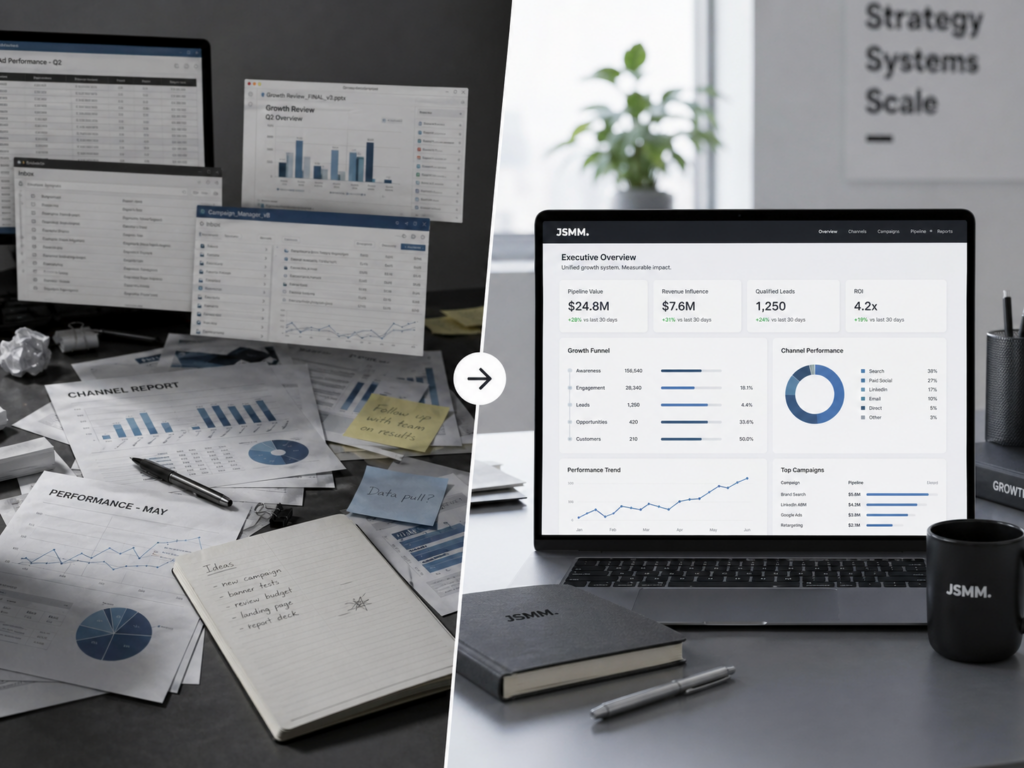
Many brands think AI will solve a growth problem on its own. It will not. AI is a strong tool, but it still needs a clear plan behind it.
Here are some of the reasons why most brands struggle to scale with AI:
Weak strategy
If your offer is unclear, your funnel leaks leads, or your messaging does not connect, AI will only help you move in the wrong direction. Speed does not help if the system is off.
Disconnected channels
Paid media, SEO, content, email and social often run in silos. Each channel may be working hard, but they are not working together. That creates waste and makes scaling harder.
Poor Measurement
Many teams still track activity instead of business outcomes. They can tell you how many clicks they got, but not what is driving qualified leads or sales conversations. Without that clarity, scaling will always feel riskier than it should.
What Should You Fix Before You Add More AI?
Before you add more AI, you need to get clear on what growth means for your business.
You also need to identify the bottleneck that is slowing down results.
In my experience, this is where companies either build real momentum or keep spinning their wheels.
Define The Growth Goal First
Start with the business outcome you want most. That may be:
- More qualified leads
- Better conversion rates
- Lower cost per lead
- Better pipeline visibility
- Stronger return on ad spend
Find The Constraint Before You Scale Output
Once you know the goal, find the part of the system that is slowing growth. That may be:
- Weak landing pages
- Poor follow-up
- Low-quality traffic
- Slow content production
- Limited search visibility
- Incomplete reporting
Use One Scoreboard To Guide Better Decisions
Your team needs one clear view of what matters most. That means connecting marketing activity to business outcomes, not just tracking channel performance in isolation.
A single scoreboard helps you focus on the numbers that guide better decisions. That may include qualified leads, cost per lead, conversion rate, pipeline contribution, booked calls, or return on ad spend.
The right mix depends on your model, but the goal stays the same: make it easier to see what is working, what is slowing down and what needs attention next.
Where Can AI Help You Scale Marketing The Fastest?
The fastest gains usually come when you use AI for business growth in parts of your marketing system that work together, making your team feel more supported and confident in their efforts.
The biggest opportunities usually include:
- Better keyword and topic planning.
- Stronger content production and repurposing.
- Smarter audience segmentation and personalization.
- Faster multi-channel campaign management.
- Better lead nurturing and funnel automation.
- Easier reporting and analysis.
- Faster alerts around sentiment and performance shifts.
- Better SEO and AI search visibility.
What I am seeing right now is that many teams use AI in one narrow part of marketing and expect bigger business results to follow.
That usually is not enough. Real scale happens when AI helps your channels work together, your reporting gets clearer and your decisions get better over time.
How Can You Use AI To Scale Your Marketing And Grow Your Business?
Here are some ways you can use AI to scale your marketing and drive business growth:
Build Stronger Content Systems
AI can speed up content production, but the bigger opportunity is building a system that makes content easier to scale and improve over time.
Instead of starting from scratch for every blog, email or campaign asset, you can use AI to turn one strong idea into multiple pieces that support the same growth goal.
That helps businesses, agencies, and internal teams produce more output without sacrificing consistency.
It also takes the most repetitive parts of content optimization off your plate. AI can generate titles, meta descriptions, header structures and first-draft outlines based on search trends and performance patterns.
The point is not just faster writing. It is a better resource allocation.
Use AI here to:
- Turn one core idea into blogs, emails, ads and social content.
- Draft outlines and briefs faster.
- Generate optimized titles, descriptions and headers.
- Refresh older content instead of always starting new.
- Keep messaging stronger across the full marketing system.
Smarter Audience Segmentation And Personalization
AI can help you move beyond broad audience groups. It can sort people by behavior, interest and engagement patterns.
That helps you send the right message at the right time. It also helps you use your budget more wisely.
This matters because people respond better when marketing feels more relevant. Twilio reports that 88% of consumers are more likely to make a purchase when brands personalize in real time, with 35% saying they are significantly more likely to buy.
Use AI here to:
- Segment audiences by behavior and intent.
- Personalize messaging by offer or funnel stage.
- Tailor follow-up based on actions taken.
- Support better email and nurture sequences.
- Improve targeting without relying on guesswork.
Stronger segmentation helps your whole marketing system perform better.
When you can tell who is in early research mode, who is comparing options and who is ready to act, you can match the right message to the right stage.
That improves relevance, reduces wasted spend and helps more traffic turn into qualified leads.
Over time, this creates a compounding effect. Better segmentation improves targeting, messaging, nurture timing and conversion paths all at once.
As those pieces get sharper, marketing becomes easier to scale because your system works with greater precision, not just more volume.
Multi-Channel Campaign Management
Instead of treating paid media, email, content and retargeting as separate efforts, AI can help you see how they perform together and adjust faster.
Use AI here to:
- Compare campaign performance across channels.
- Reallocate attention or budget toward stronger performers.
- Spot weak messaging earlier.
- Adjust timing or sequencing across touchpoints.
- Keep campaigns aligned to the same growth goal.
This works best when you use AI inside systems that connect campaign data and help your team act on it faster. That may include:
- A unified reporting dashboard that pulls in data from multiple channels.
- A marketing automation system that triggers actions based on behavior.
- A CRM-linked nurture system that tracks lead movement across touchpoints.
- An AI analysis layer that reviews performance patterns across campaigns.
AI can pull performance signals from those systems into one view and analyze them faster than a team could manually. That helps you see where the full journey is working, where it is breaking down, and which channel combinations are actually supporting conversion rather than just creating activity.
As your channels become more aligned, marketing becomes easier to scale because each effort builds on the others rather than competing for attention.
AI Alerts For Sentiment Analysis And Early Performance Signals
Automated alerts can help you catch what your team might miss when volume increases. That includes shifts in audience response, changes in engagement patterns, negative feedback trends or campaign fatigue before they become larger problems.
Use AI here to:
- Monitor shifts in engagement or sentiment.
- Flag sudden drops in campaign performance.
- Identify repeated customer concerns.
- Spot creative fatigue earlier.
- Surface patterns that may affect trust or conversion.
Strengthen Lead Nurturing And Funnel Flow
If traffic is growing but leads are not moving forward, AI can help you improve what happens after the click. That includes faster response times, better segmentation and more relevant follow-up based on interest or behavior.
Use AI here to:
- Route leads faster.
- Trigger follow-up based on actions taken.
- Personalize nurture flows.
- Support chatbot or conversational intake.
- Reduce lead drop-off between touchpoints.
Improve Reporting And Decision-Making
Instead of spending hours pulling numbers, cleaning spreadsheets and building the same reports over and over, AI can help you turn reporting into a faster decision-making system.
Use AI here to:
- Pull insights faster across campaigns and channels.
- Highlight changes in performance automatically.
- Draft first-pass reporting summaries.
- Make reports more useful for different stakeholders.
- Reduce time spent on repetitive reporting work.
This works best when you use AI inside systems like reporting dashboards, marketing automation platforms, CRM-linked revenue systems and cross-channel campaign management tools that connect your data and help your team act on it faster.
AI can pull signals from those systems into one view and surface patterns faster than a team could manually. That helps you see what is changing, what needs attention and which trends are actually affecting pipeline, conversion or spend efficiency instead of just adding more numbers to review.
From where I sit, that is one of the most valuable uses of AI in marketing. The point is not just faster reporting. It is faster clarity.
What Does A Scalable AI Marketing System Actually Look Like?
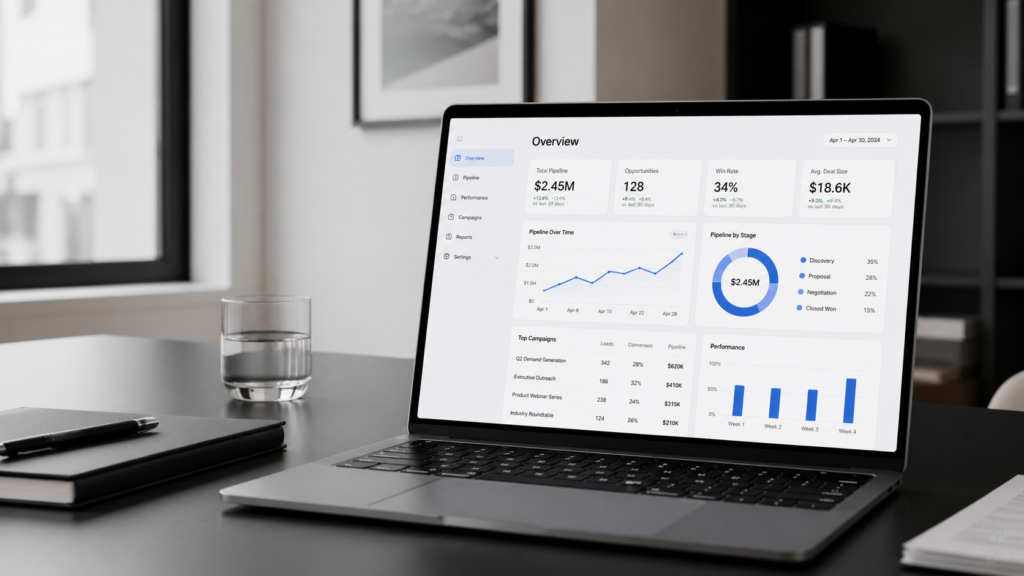
A strong system usually includes:
- Paid media that supports the funnel.
- SEO that supports discoverability and trust.
- Content that supports both visibility and conversion.
- Follow-up that supports lead movement.
- Reporting that connects spend to outcomes.
Connected Channels Support Stronger Performance
Your paid media, SEO, content and nurture efforts should work together. Each one should support the same audience journey. That creates stronger performance and a clearer path to scale.
Conversion Paths Need To Keep Learning
Landing pages, forms, offers and follow-up sequences should not stay static. They should be tested and improved over time. AI can support that process, but only if you are measuring the right things.
Reporting Should Connect Spend To Business Outcomes
A scalable system should make it easier to see:
- Which channels drive qualified leads?
- Which campaigns influence sales conversations?
- Which content supports visibility and trust?
- Where conversion is slowing down.
What Is The Right Order For Scaling Marketing With AI?
If you want to scale your AI marketing without creating more waste, the order in which you do so matters. In my experience, the teams that get the best results do not start with tools. They start with clarity, then apply AI where it can strengthen the system.
Step 1 – Audit What Is Already Working
Start with real performance signals. Look at the channels, messages and campaigns that are already driving action.
Step 2 – Find The Weakest Point In The Funnel
Identify where growth is slowing down before you try to scale output. That may be traffic quality, conversion, follow-up or reporting.
Step 3 – Apply AI Where It Creates Clear Business Value
Use AI where it improves planning, reporting, follow-up or optimization. Keep it tied to a real business need.
Step 4 – Connect Your Channels Into One Growth System
Make sure your paid, organic and nurture efforts support the same goal. Scale gets harder when channels move in different directions.
Step 5 – Measure Before You Scale Harder
Use visibility to guide your next move. You should know what is working before you add more spend, more content or more automation.
How Do You Know If You Are Ready To Scale With AI?
You are likely ready to scale with AI when demand is present, but your marketing feels harder to manage or improve than it should be. That can happen in a growing business, an agency or an internal marketing team when increased activity does not lead to greater clarity.
Common signs include:
- Leads are coming in, but conversion feels inconsistent.
- Your team is busy, but it is hard to see what is driving the pipeline.
- Your channels feel disconnected.
- Reporting shows activity, but it is not clear what the business impact is.
- You need a stronger system, not just more execution.
Turn Your Marketing Into Revenue By Using a Smart Growth System
If you want to scale your marketing with AI for business growth, do not just look for more output.
Look for a stronger system. The right system helps you attract the right traffic, improve conversion, see what is working and make better decisions as you grow.
That is what JSMM’s Growth Partner service is built to do. It helps you:
- Build one clear growth plan so your channels, offers and goals work together.
- Connect traffic and lead generation through ads, content, SEO and funnels.
- Improve conversion after the click with better follow-up, testing and lead flow.
- See performance more clearly with live visibility into leads, pipeline and payback.
- Scale with stronger leadership so decisions stay focused on revenue rather than scattered activity.
When those pieces are connected, marketing becomes easier to manage and easier to scale.
Explore JSMM’s Growth Partner service.
FAQs
What is AI marketing, and how does it help business growth?
AI marketing uses tools that help analyze data, automate tasks, and improve decision-making. This can help your business move faster, work more efficiently, and get better results from your marketing.
How can AI help scale marketing without growing the team?
AI can take over time-consuming tasks such as reporting, audience analysis, email workflows, content support, and ad optimization. That helps your team handle more work without needing to increase headcount at the same pace.
What parts of marketing can AI improve the most?
AI is especially helpful for content planning, paid ad optimization, customer segmentation, lead nurturing, reporting, and personalization. It helps marketers spot patterns faster and act on them more efficiently.
Is AI marketing only useful for large businesses?
No, AI can also be very useful for small and mid-sized businesses. In many cases, it helps smaller teams compete more effectively by saving time and improving focus.
Will AI replace human marketers?
No, AI works best as a tool that supports human marketers, not as a replacement for them. Strategy, creativity, brand voice and decision-making still need human insight.
